·Recently, Dr. Zhang Fusheng and Professor Li Wei from the School of Chemistry and Chemical Engineering, in collaboration with Researcher Qing Guangyan from the Dalian Institute of Chemical Physics, Chinese Academy of Sciences, achieved significant progress in the field of chiral optical materials. They jointly developed a multimodal chiral anti-counterfeiting material capable of ultra-stable, long-lived, and multicolor circularly polarized phosphorescence emission. The research findings were published in the internationally renowned journal Advanced Functional Materials under the title “Ultra-Stable, Long-Lived, and Multicolor Circularly Polarized Room-Temperature Phosphorescence Enabled by Shrimp-Derived Chitosan Nanocomposite Chemistry.” The School of Chemistry and Chemical Engineering at Wuhan Textile University is the first corresponding author institution. Wang Hao, a 2023 master's student, is the first author of the paper.
Circularly polarized room-temperature phosphorescence (CPRTP) represents a rapidly emerging field with immense potential across numerous cutting-edge applications, including naked-eye 3D displays, circularly polarized electronic devices, bio-chiral imaging, anti-counterfeiting, and optical data storage. Despite its promising outlook and the exploration of multiple technical approaches, the field still faces several critical challenges: complex synthesis processes, limited material diversity, significant energy loss, and pressing environmental sustainability issues. Developing CPRTP materials from sustainable biomass represents a highly promising research direction for chiral photonics and advanced optical applications. However, existing bio-based CPRTP systems generally suffer from limited tunability of emission colors, poor stability in humid or aqueous environments, and insufficient phosphorescence lifetimes.
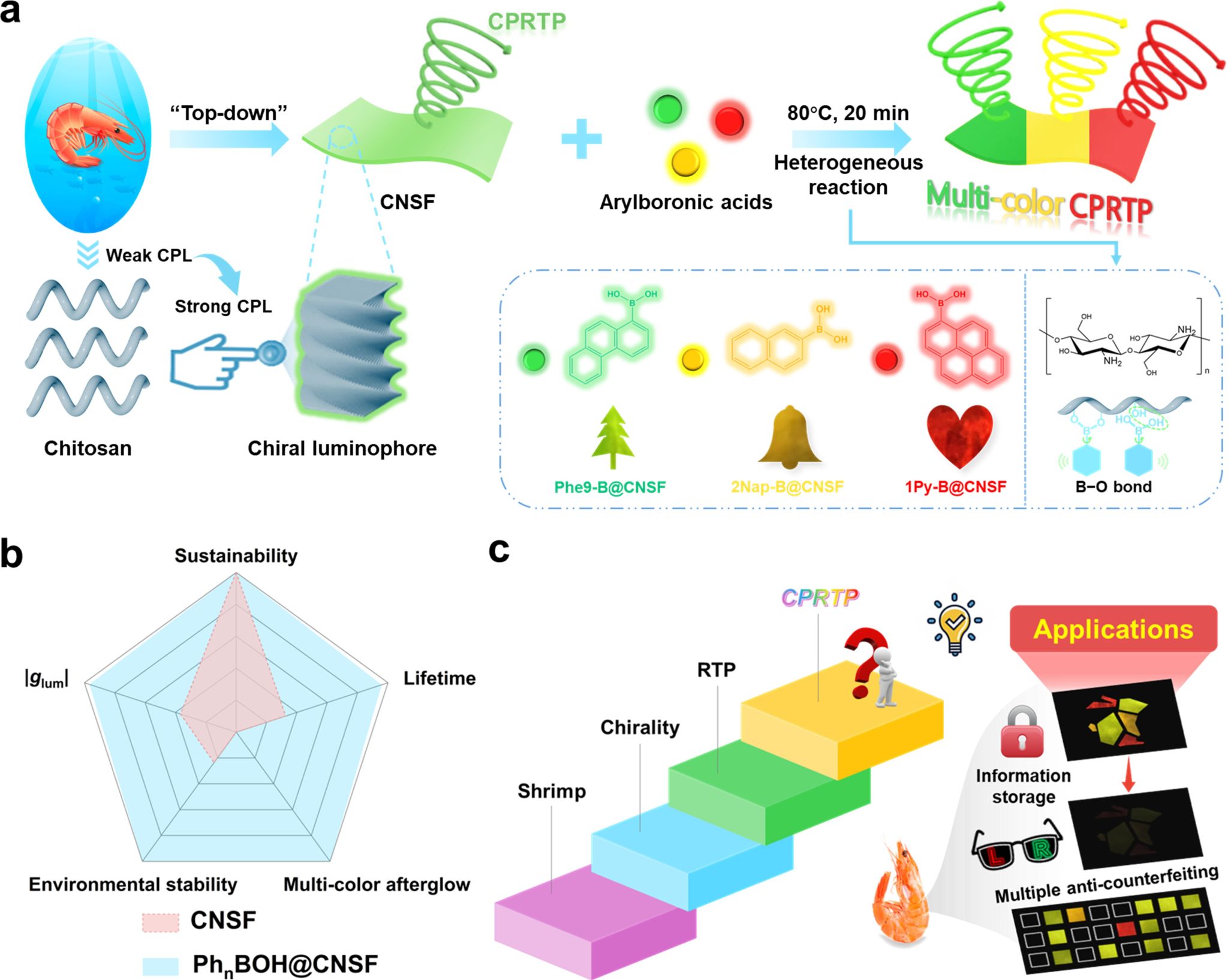
Figure 1: Schematic of the preparation process for a multicolor, long-lifetime circularly polarized room-temperature phosphorescent emission film.
In this work, we propose a simple and versatile molecular engineering strategy to anchor arylboronic acid chromophores onto shrimp-shell-derived nanostructured chitosan films via B−O covalent bonds (Figure 1). The synergistic rigidification effect of B−O covalent bonds and hydrogen bonds stabilizes triplet excitons and suppresses nonradiative decay, while the material's intrinsic chiral nematic phase structure preserves circular polarization properties. The resulting composite films exhibit tunable right-handed circularly polarized triphosphorescence (CPRTP) emission (covering green, yellow, and red) at room temperature, featuring ultra-long phosphorescence lifetimes (419–805 ms) and high asymmetry factors (up to −0.29). Furthermore, comparative analysis with other advanced CPRTP systems highlights the exceptional performance advantages of this photonic platform based on shrimp-shell-derived chitosan. Its synergistic properties—multicolor emission, ultra-long phosphorescence lifetime, and high asymmetry factor—fully demonstrate the immense potential of such sustainable materials for practical CPRTP applications.
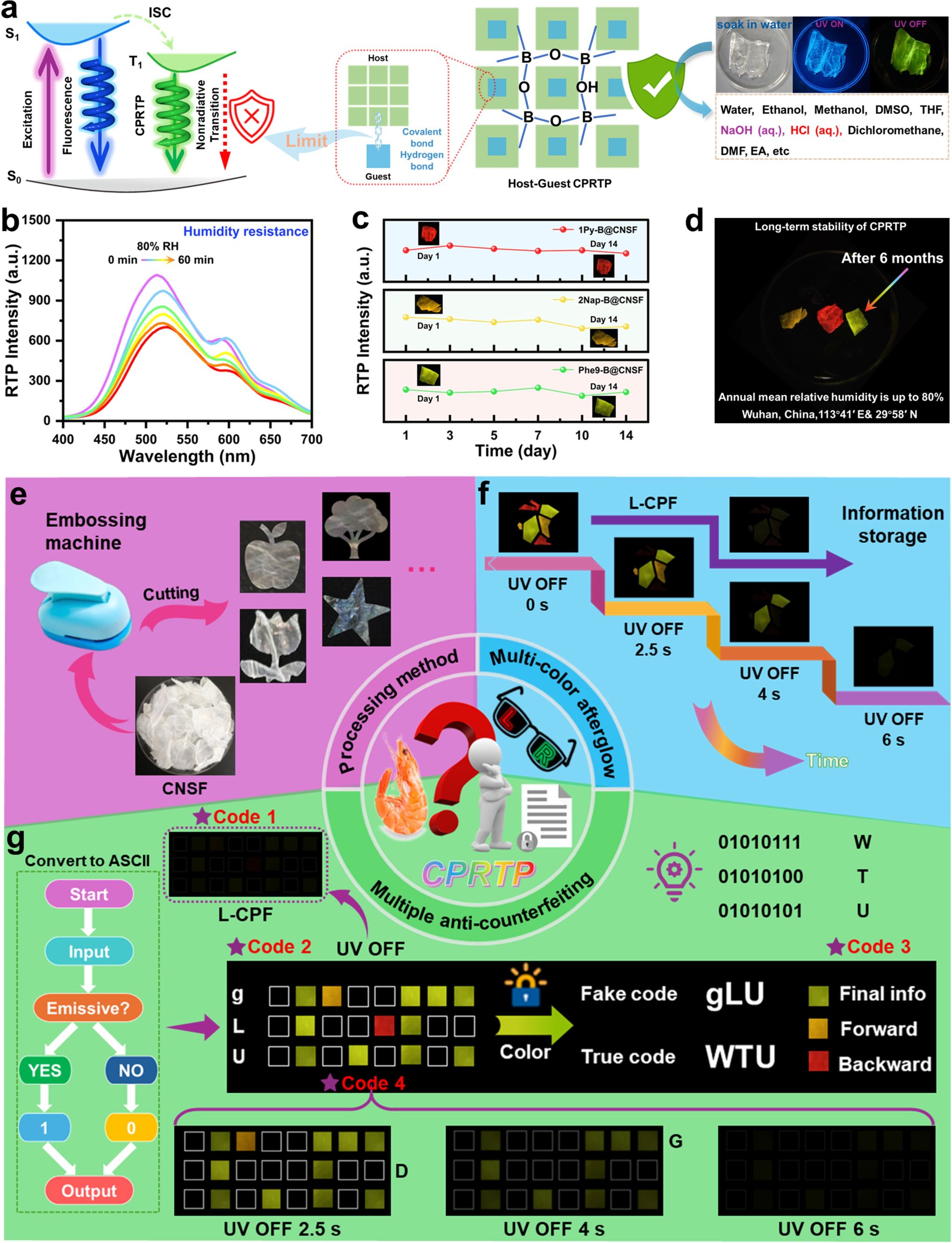
Figure 2: Comprehensive Characterization and Demonstration of Multi-Level Information Encryption Application Potential
Particularly noteworthy is that even after prolonged immersion in harsh hydrophilic environments such as acidic, alkaline, or saline solutions, or exposure to various organic solvents, this composite film exhibits no significant quenching. It maintains excellent stability for up to six months while retaining outstanding flexibility and convenient processability. Leveraging these unique advantages, we have successfully developed a multi-level anti-counterfeiting encryption system based on QR codes and binary encoding. This system leverages multiple optical “codes” inherent to the material—including fluorescence, long-lived phosphorescence, circular polarization properties, and time-dependent afterglow—to achieve high-security information encryption (Figure 2). This research not only pioneers a novel pathway for high-value utilization of shrimp shell waste but also fully demonstrates the resource value of biomass-based CPRTP materials, laying the foundation for their further application in chiral photonic devices and related fields.
Original link:https://doi.org/10.1002/adfm.202527613